Monday, February 10, 2014

Chuntakurus in Tena, Ecuador

A very popular, and traditional, food course here in the Ecuadorian Amazon is Chuntakuru. 

A lot of people all around from Ecuador come here to eat it and it is considered very delicious. 

I have tried it out also and I must admit, it tastes good, a little coco nutty and greasy, but very good.
This is the Kichwa woman who cooked the first chuntakurus I ever ate.

The only problem is that chuntakuros are actually huge white worms that live in the chonta palm tree.

They can be barbequed on wooden sticks, prepared in Maito (wrapped in local leaves and baked in their own juices) or eaten alive.
traditional kitchen in Ecuador
This is her daughter at the restaurant kichen.

But the trick is that chonta is extremely hard tree and the worms have huge jaws and they can bite really hard.

So, if you are not careful, you can end up with a tongue piercing instead of enjoying a delicious meal.
This is where the chuntakurus were prepared, inside leaves on hot coals.

For locals, the times when chuntakuros can be found is very important.

The worms were before one of their main protein sources, just like a really big flying ant called ukuy in Kichwa.

My aspiration has never been eating worms of any kind.
Chuntakurus, alive and doing well. Eating the chontapalm, and crawling around, just like they love to do.

I did eat ants at school because the boys would eat them and I didn't want to look like a sissy.

But worms weren't definitively something I ever wanted eat in my life.

I was well as long as we were working in a different part of the Ecuador.
The picture is a bit blurry but I wanted to show how big they actually are.

But when we decided to move to Tena, I starts to prepare myself mentally to all the foods that were waiting for me.

I have eaten deer, armadillo, porcupine, several types of roedents they have here, different sort of fish, insanely spicy chili peppers that make me want to die or drink a river, white cacao beans (that I actually recommend), and some very strange fruits. 
This is maito de chontacuro, all cooked and prepared. Just look at those jaws!

I have also eaten tree peanuts (they grow in a tree, they are bigger than a peanut and they taste just like peanuts), regular peanuts boiled and cooked soft, and chonta palm's fruit (very good also).

I have drunk traditional drinks made by chewing the mash of different fruits and tubers and then spitting it to dirty river water and stirring it with even dirtier hands called chicha or aswa.

My personal favorite is sara aswa, or corn chicha.
This is me, trying to be brave enough to put the worm in my mouth.

I'm still waiting to try boa, caiman and monkey meat.

And at one point I just knew it was the time to eat chuntakurus.

Because in a Kichwa village you cannot refuse what you have been offered.
Chewing the worm, and, honestly, trying very hard not to puke it.

You say thank you, you eat and drink everything you have been given.

If there are extra worms or ants in the food, like my dad says, it's just protein.

I have made my peace with chuntakurus, we are not friends, their consistency is too wormlike for me.
My little nephew wanted to taste chuntakurus and my niece can't just believe how disgusting they are.

But they do taste good and I can understand why people love to eat them.

If you are ever looking for extreme food and eating experiences, I recommend coming to Tena in Ecuador and trying out pinchos de chuntakuru or maito de chuntakuru.
He was a HUGE Fear Factor fan. And he really wanted to tell all his friends about how he ate worms when he visited his aunt and cousin in Ecuador. So, he actually ate them. My niece didn't want to ANYTHING to do with them.

I will not explain you how to prepare them because I’m sure you will not be able to buy them around.

And probably wouldn’t want to prepare them even if you could.

But if you come to Ecuador, I am sure to let you know the best place to try them out.
He's trying to find the words to describe how the worms tasted.

Sunday, February 9, 2014

We need God


“For the trouble is that one part of you is on His (God’s) side and really agrees with his disapproval of human greed and trickery and exploitation. You may want Him to make an exception in your own case, to let you off this one time; but you know at bottom that unless the power behind the world really and unalterably detests that sort of behavior, then He cannot be good. On the other hand, we know that if there does exist an absolute goodness it must hate most of what we do. This is the terrible fix we are in. If the universe is not governed by an absolute goodness, then all our efforts are in the long run hopeless. But if it is, then we are making ourselves enemies to that goodness every day, and are not in the least likely to do any better tomorrow, and so our case is hopeless again”.
C. S. Lewis – Mere Christianity
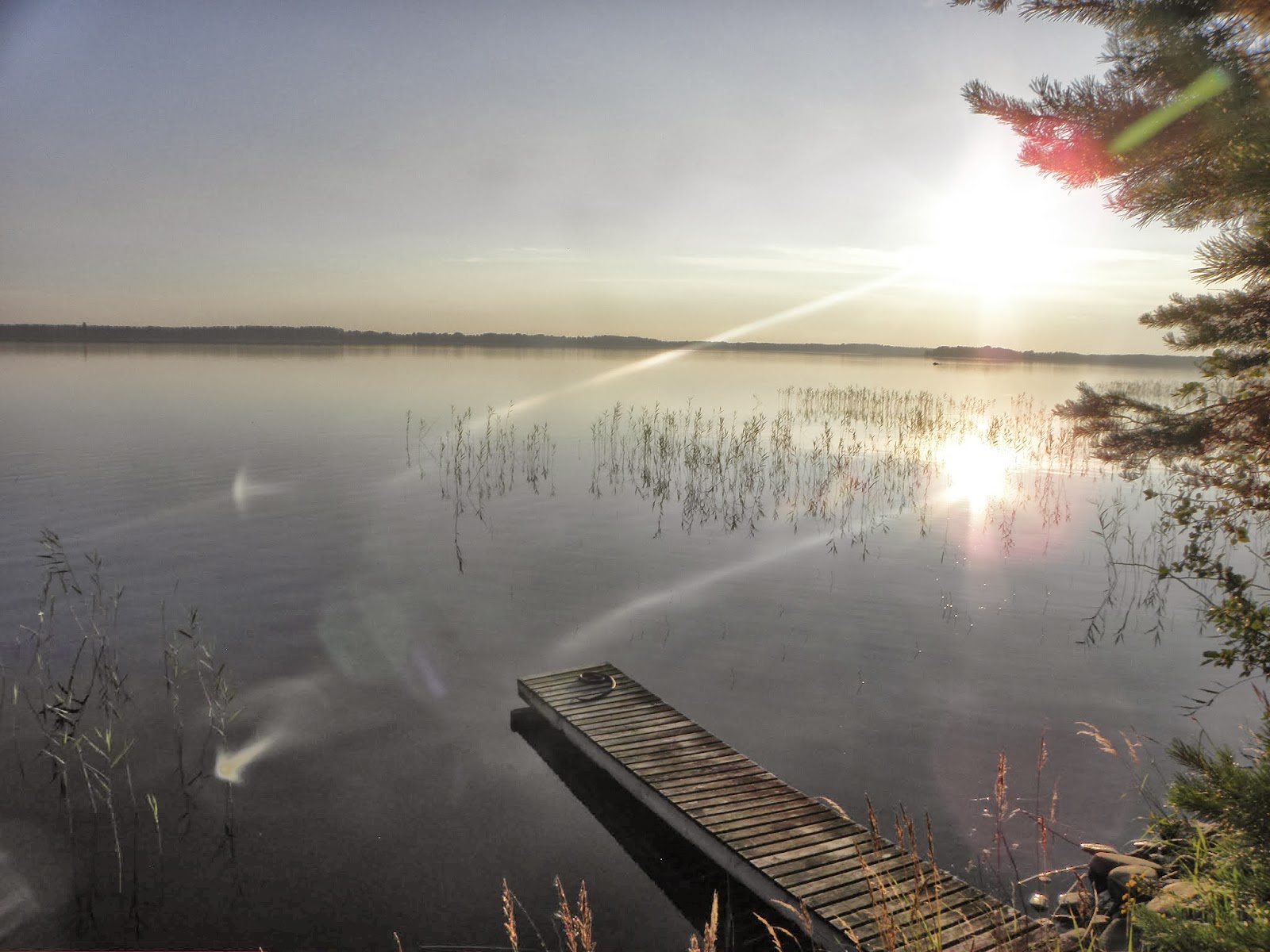
summer, Finland

Now if you have come to honestly believe that there must be a moral law Giver for a moral law to exist, what is the next thing to do?

How can you proceed?

As I said before, if you believe in relativism, there is a huge amount of religions to choose. You can make any of them your own and decide that that particular faith is your moral giver.

Or you can believe that Christianity is the real thing.

You can choose Christian God.
summer, Finland

You can accept that Christians offer you an answer to why there is evil in the world and also how we can overcome the evil.

As C. S. Lewis says “When you have realized your position is nearly desperate you will begin to understand what the Christians are talking about. They offer an explanation of how we got into our present state of both hating goodness and loving it. They offer an explanation how God can be this impersonal mind at the back of the Moral Law and yet also a Person. They tell you how the demands of this law, which you and I cannot meet, have been met on our behalf, how God Himself becomes a man to save man from the disapproval of God”.
summer, Finland

This means doing some radical thinking. Changing your worldview and accepting that you may not always be right.

It also means accepting that there is someone far greater and more magnificent you could ever imagine.

The problem is that, even though this is a very comforting idea of a great loving person behind everything. It is also a very dangerous and terrifying idea of a great perfect being behind everything.

Just like C. S. Lewis says “God is the only comfort, He is also the supreme terror: the thing we most need and the thing we most want to hide from”.
summer, Finland

But what are you looking for?

The truth?

Or something to take away your fears and comfort you during the lonely nights?

Again a quote from C. S. Lewis: “If you look for truth, you may find comfort in the end: if you look for comfort you will not get either comfort of truth – only soft soap and wishful thinking to begin with and, in the end, despair”.

Or a thought from a great Russian literary masterpiece:
“It's God that's worrying me. That's the only thing that's worrying me. What if He doesn't exist? What if Rakitin's right -that it's an idea made up by men? Then, if He doesn't exist, man is the king of the earth, of the universe. Magnificent! Only how is he going to be good without God? That's the question. I always come back to that. Who is man going to love then? To whom will he be thankful? To whom will he sing the hymn? Rakitin laughs. Rakitin says that one can love humanity instead of God. Well, only an idiot can maintain that. I can't understand it. Life's easy for Rakitin. 'You'd better think about the extension of civic rights, or of keeping down the price of meat. You will show your love for humanity more simply and directly by that, than by philosophy.' I answered him: 'Well, but you, without a God, are more likely to raise the price of meat if it suits you, and make a rouble on every penny.' He lost his temper. But after all, what is goodness? Answer that, Alyosha. Goodness is one thing with me and another with a Chinaman, so it's relative. Or isn't it? Is it not relative? A treacherous question! You won't laugh if I tell you it's kept me awake for two nights. I only wonder now how people can live and think nothing about it. Vanity!”
― Fyodor Dostoyevsky, The Brothers Karamazov


To begin, read Natural law. A post about the law we all have in our hearts.

If you would like to know what comes after read the post about Moral law.


Having read that, you'll need to know Which moral law to choose

If you agree that you need God, read to find out What is sin.

Saturday, February 8, 2014

492 Ystävä sä lapsien

Ivar Widéen 1919


1.
Ystävä sä lapsien,
katso minuun pienehen.
Minne käynkin maailmassa,
sinä olet hoitamassa.
Onni täällä vaihtelee,
taivaan Isä suojelee.

2.
Ota, Jeesus rakkahin,
suojaas koti kallehin.
Siunaa äitiä ja isää,
heille elinpäivää lisää.
Ystävä sä lapsien,
pientäs auta holhoten.

3.
Pidä meitä turvissas,
Jeesus, armohelmassas.
Suojaas sulje isänmaamme,
sulta kaiken lahjaks saamme.
Johda, Jeesus rakkahin,
meidät taivaan kotihin.


Säk. 1 ruotsalainen 1780. Suom. Arvi Jännes 1889. Säk. 2 Siri Dahlquist 1911. Säk. 1–2 suom. Lauri Pohjanpää 1923. Säk. 3 komitea 1937. Virsikirjaan 1938.


Friday, February 7, 2014

Gospel Friday Countdown

When I was in High School I was both in our school choir and our church's choir.

I just loved singing, and sometimes, like everyone does, I dreamed of stardom and singing in front of thousands of people.

It was such an exciting thing.

But at the same time I loved singing in the choir of our little church, with definitely not even hundreds of people, because I just loved to sing.

And I loved our group, they were all my friends and we had wonderful time.

We goofed around, we had fun, we talked, we joked and we prayed.
Sing your heart out!

We even had a special tradition of the anger circle, where everyone could tell what annoyed them about someone.

You couldn't get angry and hurt, even though it was called the anger circle, but you couldn't tell mean things just to hurt the other person.

The idea was to vent your feelings and then let the other person to express what they thought about what was happening.

It worked really well, surprisingly well actually, thinking that we were a group of teenage girls without an adult to guide us.

Even our choir leader was just seventeen.

But it cleared the air and when it was the time to sing in the church, we could sing our hearts out.
Singing is even better with your friends!

It was in the 90's and the worship songs just started to come into fashion in Finland.

Whenever I hear worship songs, it reminds me of that time and of the friends I had and how I wanted so much to give my heart and life to Jesus, with every song.

Now I have so many disappointments and hurts.

I'm old (almost 40, can you believe) and scarred.

It has been a real struggle but when I'm at a church, or at my house, or in the car, listening to worship songs, I still sing my heart out.

These worship songs are a bit younger than that.

But they are songs that talk to me and make me want to burst out singing.

Matt Redman has many fantastic songs and I'm sure many of you feel that these are not the best five.

But this is my Top 5.

5.  Your Grace Finds Me

 
I can always trust that Your grace finds me.

You are faithfull, I can always trust You.

Always!

4. Never Once


I have never walked alone.

Even when I thought I would die from the pain.

Even when I felt my heart brake and soul wither away.

Never once did I walk alone.

3. Blessed Be Your Name


I want to bless Your name.

I know that every day I can trust your mercy and love.

Every day I'm closer.

Every step brings me nearer to You.

2. Holy


I can never understand You.

I cannot comprehend Your Grace.

My heart does not hold Your Holiness.

What I am, is Yours.

1. 10000 Reasons


There are 10 000 reasons why I love You.

There are 10 000 ways You love me.

There are not days enough to worship Your holy name.

Wednesday, February 5, 2014

Wednesday Facts

Today is Wednesday. It's no Friday but it's not Monday, either.

To honor the fact that we are in the middle of week, I will tell you five facts of life, about me or someone else, faith, world and existence in general.

And what I want from you, my readers?

I want to know about you! 

Leave me your facts, so I can enjoy reading them!

They can also be about you, your life or anything you find fascinating in this world or in the world beyond.

Today I want to share you facts about our work here in Ecuador.


1. I work in a developmental project called “The learning path for indigenous disabled children and young people in district of Napo”. It is a mission by Finnish Free Evangelical Church and its sister church Iglesia Pacto Evangélico del Ecuador or Ecuadorian Covenant Church. The project is funded by Finnish Foreign Office and its part of their developmental work in third world countries. Our local partner here, the church, has a foundation called Fundación Adelanto Comunitario Ecuatoriano or FACE that administrates the chuch’s diaconal work. We are part of the local Covenant church’s diaconal branch. I know it’s long and complicated and sometimes even I don’t who I actually work, LOL.

2. The projects started because the local Bilingual Intercultural Education Department in Napo province in Ecuador, asked for support to create an inclusive and special education program. There have not been any special education schools in the bilingual system, ever, in Ecuador. There are several indigenous groups in Ecuador but in Napo the biggest group is Kichwa indigenous people and that is who we are working with.


3. Our goal here has been to develop a culturally appropriate model for inclusive and special education in kichwa schools. It has been a challenge and a blessing. On one side the disability is a huge taboo in the culture and has made our work hard, on other side, there are no bad educational practices to get rid of. The educational department has opened their doors and, surprisingly, the communities and the people have opened their hearts to the disabled students. It has been a struggle but they are, mostly, receiving an education.

4. We provide training for the special education teachers and regular teachers about inclusion and special education techniques and methods. The foundation has a multiprofessional team that both educates the teachers, administrative staff and parents and does evaluations, assessments and helps the teachers to create personal learning plans for the inclusive and special education students. We also do rehabilitation to the students together with the teachers.

5. There are 37 schools involved in our program with a total of 42 special education teachers. These are all regular schools with a special education classroom. The students’ needs range from learning disabilities to severe and multiple disabilities. In total there are 456 children and youth with disabilities included in our program and in the different schools. Some of them are in total inclusion; some are in a support program where they are drawn out of the classroom for specific classes. There are students who study in a special education classroom, students who are visited by a teacher at their homes and as something brand new we have started a program that prepares youths and young adults with disabilities to an adult life.

There are a lot of challenges, a lot of needs but also a lot of will and love.

Poetry Wednesday

“Thank You, God...”

Thank you, God: I dream of him more seldom,
And don’t see him now in every place,
The white path with clouds has been laden,
Easy shadows o’er the waters raced.
And all day the chime of bells arose
O’er the ocean of the ploughed soil;
Here the toll is best-heard from Saint John’s 
Belfries which are seen afar, the tall.
I am cutting off the lilac fashioned 
For the brunches that have lost their bloom;
Two black monks passed by in conversation
On the ramparts to the aging doomed. 
Let, for blind me, the plain, dear and earthly
World again be turned into alive.
Our Lord has made my soul healthy
With the icy calm of the non-love. 
 
Anna Akhmatova