

The city of Archidona in Napo, Ecuador
organized an Intercultural Fair, Jumandi Yuyay in this November.
The fair lasted from November 21st
till November 29th.

The fair was organized to honor the national hero Jumandi, a kihos-nawki
kasike who fought against the Spanish conquistadors.
The program for the fair included a cultural walk up to the Vocano
Sumako.

The walk lasted three days and during it there was held different
cultural activities and ceremonies.
Besides the walk the municipality organized contests for students and a
book about Jumandi’s life was released.

An exposition of Amazonic agricultural and hunting techniques and
architecture was held.
There was also a contest for the best traditional dish.

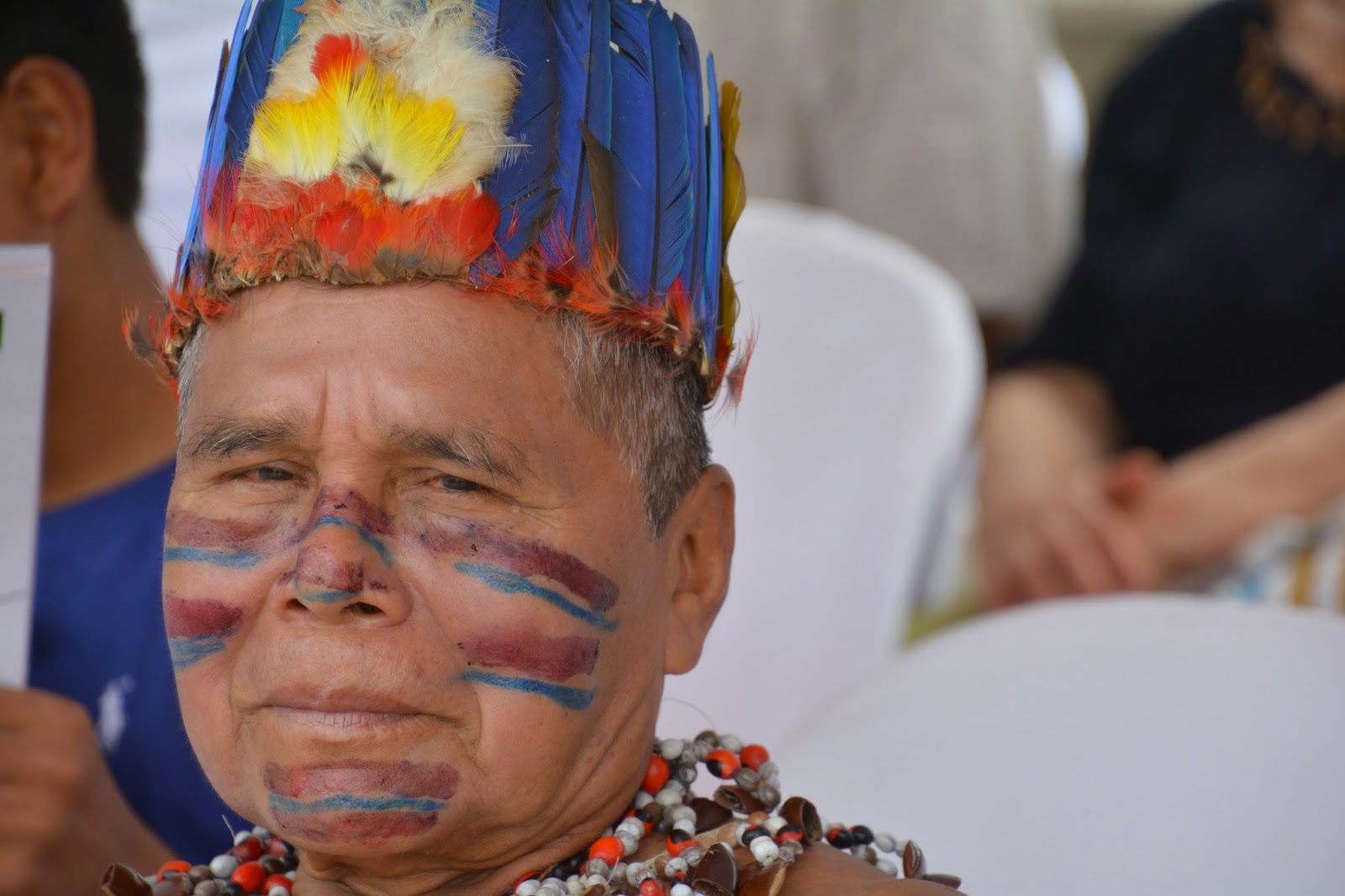
The festivities culminated on Saturday 29th into a Cultural
Festival with an ancestral ceremony and representations of traditional music,
dancing and verses.

The ceremony was held in honor of hero Jumandi and was a collaboration of
many local kurakas or shamans.
The fair will be held every year at the same time.

If you are planning to visit Ecuador and especially Ecuadorian Amazon,
this would be a perfect opportunity to enjoy the traditional culture.

Who is Jumandi?
Jumandi is a national hero of Ecuador and he has been officially
recognized by the National Assembly as such.
Dozens of Amazonian Indians lobbied his recognition as one of the
leaders of the Ecuadorian indigenous resistance.

He is one of the initiators and leaders of the struggles against, first
the Spanish conquistadores and then their descendants, who has not been widely
recognized in the national historiography.

Jumandi is an historical figure in Ecuadorian Amazon and indigenous
people of the Amazon basin recognizes his importance in the resistance
movement.
But he was not a national figure among with Atahualpa, Rumiñahui and such.

Finally on November 29th 2011 the National Assembly
recognized the importance of Jumandi’s leadership in the struggle of indigenous
people.
And he was declared a national hero of Ecuador.

History of Jumandi
When the Spaniards arrived to Ecuador, in the Amazon basin they found a
warlike people, the Kihos-Nawkis, who were also great ceramists and farmers.

The Spanish military imposed by force their religion and government to
the people of the land.
The great warrior Jumandi, tired of the terrible treatment his people received
in the hands of Spaniards.
And conscious of their strength, organizes his best men and invites the
people of the forest to expel the invaders from their territory.
They burned the cities of Archidona and Avila that were founded by the
Spaniards.

After the success of this first battle the forest people began to sing
their chants against the invading enemies everywhere.
This is when the legend of the terrible savage forest people was born.

But the brutality of the invaders had no limits, thousands of Spaniards
arrived from Quito with their fire weapons.
Finally there were more invaders than local warriors.

Spanish conquest of the Ecuadorian Amazon
With their numbers and new weapons the Spanish win the battle and
capture Jumandi and his best men.

They took them to Quito to humiliate them and torture them publicly with
hot irons.
And eventually killed them.

On the execution day the authorities of the Real Audiencia de Quito
ordered that all indigenous people living near Quito must attend, in their best
clothes.
This brutal spectacle was to be
observed by all indigenous people so they would understand what would happen to
all who would take up arms against the Europeans.

Although it was not victorious, this was the first indigenous revolution
of America.
And it has defined the indigenous resistance’s objectives and ideals.

This revolution also prevented for many years the Spanish insertion in
Amazonian territories.

