Today is Wednesday. It's no
Friday but it's not Monday, either.
To honor the fact that we are in the middle of week, I will tell you five facts of life, about me or someone else, faith, world and existence in general.
And what I want from you, my readers?
I want to know about you!
Leave me your facts, so I can enjoy reading them!
They can also be about you, your life or anything you find fascinating in this world or in the world beyond.
Today’s facts are inspired by the Carnival in Ecuador.

1. South America's most famous
Carnival might take place in Brazil, but Ecuadoreans look forward to their own
Carnaval (they spell it with three 'a's) every bit as much.
Carnival festivities are one of the many manifestations of syncretism involved in Ecuadorian traditions and celebrations. According to the
Catholic calendar, the festivities precede the period of
Lent. Many popular festivals are held throughout the
country. It is a time of masks, jokes, water, music
and dances. Carnival is also classified
among the festivities of the spring equinox,
which is closely related to the indigenous cosmology
before Catholicism in America.
The Huarangas Indians
(from the Chimbos nation) used to celebrate the second moon of the year with a
lively festivity, during which they threw flour, flowers and perfumed water.

2. Carnival is
celebrated throughout the country in different ways. Many popular festivities are held, where
the locals wear disguises with colorful
masks, and dance to the rhythm of lively music. In Ambato (province of Tungurahua) and Guaranda (province of Bolivar),
colorful, folkloric parades take place. They are definitely worth visiting.
Many popular festivities are held in different regions of the country, where the locals wear disguises with colorful masks and dance to the rhythm of lively music. Usually, the celebrations begin with the election of the Taita Carnaval (Father Carnaval) who will head the festivities and lead the parades in each city.
In Azogues (Cañar Province) and the Southern Andes in general, the “Taita Carnaval” is a Cañari Indian dressed for the celebrations.
Ecuador Beaches are also a great destination during the Ecuador holiday of carnival. The weather is absolutely wonderful and there are also many celebrations and parades.

3. Ambato Carnival
The famous Festival of Fruits and Flowers (Fiesta de las Flores y de
las Frutas) in Ambato, is held annually in the last two
weeks of February during Carnival. This is one of the most attractive holidays of the region with colorful parades, festivities and Bullfights for up to
four days.
The festivities involve students
from schools and high schools of the city, and invited delegations from other
cities and countries. The arrays of floats are made with fruit, flowers and
pieces of bread.
The city gets decked up in lights
and invites the country’s national and international tourists to visit during
the weekend before Ash Wednesday. City-wide dances and parades are held, as
well as cultural events. Traditionally, a religious-themed mural is displayed
over the doors of the city’s main cathedral in downtown. This mural, made
entirely of flowers, fruits and bread, towers two-stories high, and is a
popular attraction for visitors.

4. Guaranda Carnival
Carnival time is teeming with
visitors from the whole province as well as neighboring ones also and has a dazzling combination of parades, dancers, strolling poets and masked
partiers who roam the streets at random. A group of local musicians also meanders in and out of various
houses through the day often receiving alcoholic beverages or the locals drink called Pajaro Azul (Blue Bird) which is a twist on
the national drink aguardiente and mixed with local herbs.
The carnival is actually opened by a large landowner who is
warmly referred to as Taita Carnaval
(Father Carnival) who finances the party himself and officially opens the
festival upon entering the town.
This sleepy mountain town, is
nestled along the slopes of Ecuador’s highest peak, Mount Chimborazo. Normally quiet
and serene, Guaranda turns into party central during the days before Ash
Wednesday. There are parades, music and dancing on every corner of every
barrio, comparsas (mini sketches played out in small processions or
parades), and lots of local cuisine and drinking. Here, water throwing is for
sissies – instead, people take to throwing flour, cornstarch, and even eggs! If in Guaranda during Carnaval,
expect to get dirty!

5. Ecuador has a
very unique version of Carnival, nothing compared to other countries
celebrations. In amongst everything else, visitors to Carnival in Ecuador
should be prepared for a bit of a soaking: the celebration is characterized by
hundreds of children, called diablillos (little devils) who roam the
streets armed with water-pistols and water-bombs looking for unwary people to
soak!
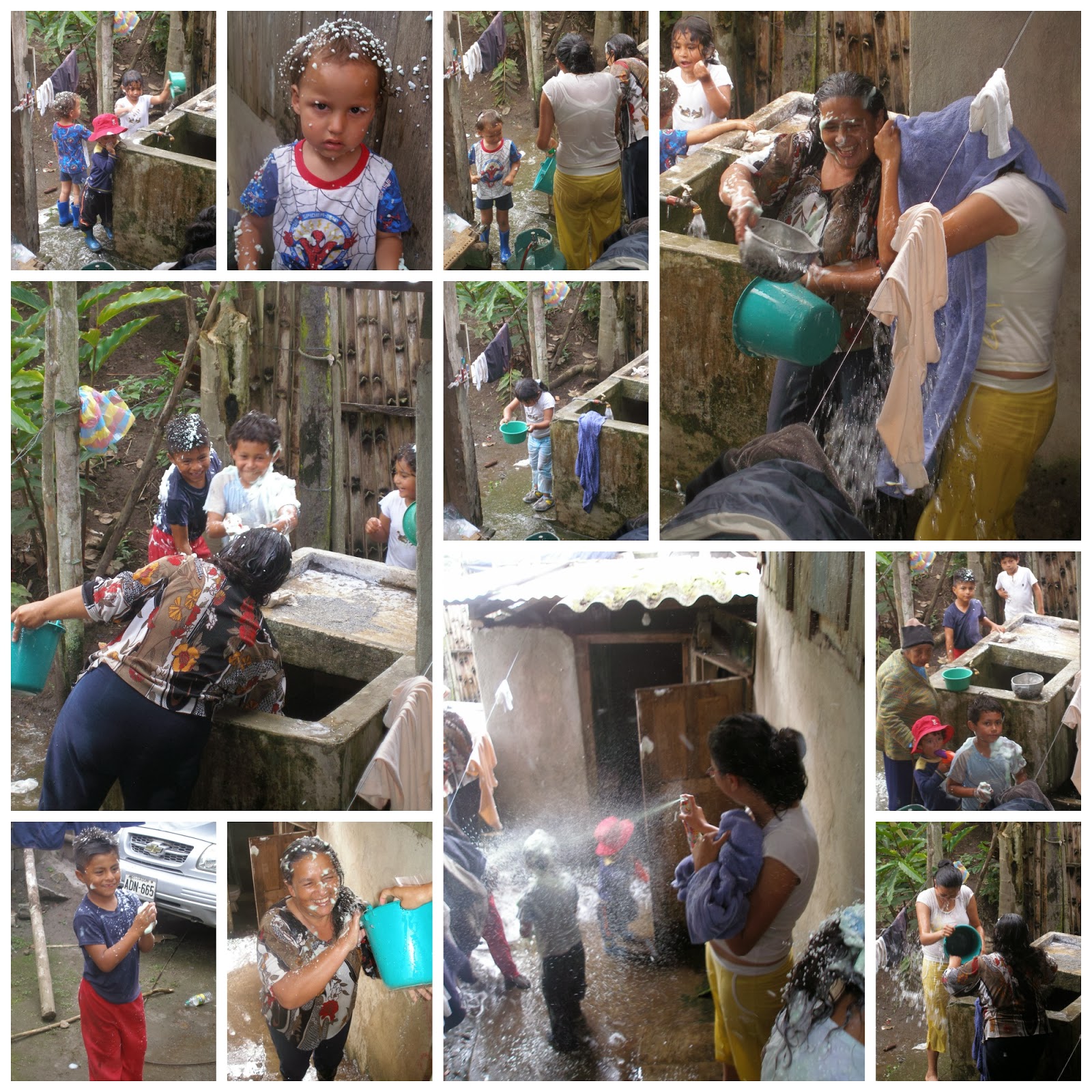
All around the country, "diablillos"
play with water. It is a somewhat crazy game, like snow fights, which is long awaited, especially by children
and teenagers, and feared by some adults. Throwing water balloons, sometimes even eggs and flour both to friends
and strangers passing by the street can be a lot of fun but can also be
annoying.
Although the government as well as school authorities have forbidden
this game, it is still widely practiced throughout the country. Historians tell
of a Bishop back in 1867 that threatened with the punishment of ex-communion
for the sin of playing Carnival games.
Some Ecuadorians don't agree, but most children and teenagers love it!.
They celebrate it throwing balloons filled with water, bags filled with flour,
water weapons and anything (even eggs) that may make others look messy. Even
before Carnival lots of people sell these Water weapons in every part of the
country.
In addition, people celebrate by spraying carioca, a foamy
substance similar to watery shaving cream. Carioca is relatively
harmless, although people often hide it in jackets or behind their backs and
then take it out by surprise, aiming at the eyes and face. Tourists should
simply be aware and on the lookout, and try not to take it personally if they
get targeted.

The main thing about Carnaval in Ecuador, however, is that it's the
biggest party of the year: beach resorts are at their busiest, there are
colourful parades and firework shows to enjoy, and generally everybody lets
their hair down. So long as you don't mind the odd soaking, it's a perfect time
to visit Ecuador...