Monday, June 23, 2014

Karelian Stew or Karelian Hot Pot


The Karelian hot pot  or Karelian stew (karjalanpaisti in Finnish) is a traditional meat stew originating from the region of Karelia (now split between Finland and Russia).

This is one of the dishes I grew up with and that I love very much.

The stew is commonly prepared using a combination of pork and beef, but lamb can also be used.

In my family we have always done the pork and beef version.

It was selected as the national dish of Finland by the readers of the Finnish tabloid Iltalehti in 2007.

The stew originated from Karelia region, where the name comes from.
In Finnish cuisine there are traditionally two trends: eastern and western.

Some of the influences of Western cuisine came from Sweden and Catholicism.

Food was cooked on the stove, no mushrooms were eaten but there were a lot of blood and sausage dishes.

Bread was baked in great quantities and eaten dried.

Eastern cuisine has its roots in the Slavonic, Orthodox tradition of cooking food in the oven.

Mushroom dishes were consumed in abundance and bread was baked every week as it was eaten soft and fresh in addition to pies and pasties.

The cuisine of North Karelia is part of Eastern Finnish cuisine, which is based on food cooked in the oven.

Many kinds of pies, pasties and rye loaves stuffed with rutabagas, potatoes and meat are also a part of our eastern cuisine.

This dish can be considered as one of the milestones of Finnish cuisine.

This extraordinary culinary conception of many years ago reflects, by its simplicity, the spirit of the times and the lifestyle of the Karelian population.

The scarcity of meat made it so that preferably all edible parts of an animal where used in its preparation, such as the liver and the kidneys.

In fact, purely meat-based versions of Karelian stew were reserved only for prominent occasions like Christmas, until meat became more readily available in the 20th century.

My family is mostly from the Eastern part of the Finland and I grew up eating oven food and loving it.

The Karelian stew had always a prominent place in our Christmas table.
The hot pot was traditionally prepared with wood-burning ovens and it is prepared after bread has been baked and the leftover heat slowly cooks the stew.

Traditionally it is seasoned only with black peppercorns and salt.

Other seasonings such as allspice and bay leaf may be used too but my familiar recipe only uses pepper and salt.

Common vegetables such as carrot, onion, and root vegetables are acceptable additions to the stew.

I always put onions and carrot in our stew but sometimes it’s good to add rutabaga or turnips to give the hot pot more flavor.

Don't trim the visible fat from the pork prior to cooking; it adds flavor to the stew.
One of the things we Finns really enjoy is the transparent broth that forms together with the stew.

It may not have a fancy taste but if done rightly, the meat will be soft that it will practically melt in your mouth.

Back home the stew is served with boiled or mashed potatoes and lingonberry preserves.

If you can’t find lingonberry, you can also use cranberry preserve; the important thing is to have that tart taste to go together with meat and potato.


Servings: 6 - 8
Ingredients
  • 1 pound boneless beef round roast, cut into 1- to 1 1/2-inch cubes
  • 1 pound boneless pork shoulder or roast, cut into 1- to 1 1/2-inch cubes
  • 1 large onion, cut into wedges
  • 2 carrots, peeled and sliced into 1/4-inch rounds
  • Salt
  • 10 whole black peppercorns

Directions
Preheat the oven to 350 degrees.
In a roasting pan or large ovenproof dish, place all of the ingredients and just enough water to cover the meat for half an hour.
Lower the heat to 200 degrees.
Roast, adding water if necessary, for 4 1/2 to 5 hours or until the meat is tender.
Check seasonings, adding salt to taste.
Transfer to a platter and serve immediately.

Enjoy!

Sunday, June 22, 2014

Organize your life to make sure you won't burn out - Part 2


This is the second part in the series to Organize your life to make sure you won't burn out


1. Turn down the stress


Usually we use give stress as a word a negative connotation.

But in reality stress is a physiological and emotional state and if it does not exist, the person is not able to function at all.

The right amount of stress helps the person to be at his, or hers, best.

But too much stress cripples and in long-term will cause a burn out.

Coping with the stress is knowing how to control the amount and duration of the stress, not eliminating stress for good.

The most important thing is to seriate the stress, not live in a constant stressful state.

Disconnect and connect


Find your own way to break out and disconnect from the thoughts and activities that cause you stress, both daily, weekly and yearly.

In today’s world a lot of things that stress us out are related to the technology.

Spending time without different electronic devices and communication is one of the easiest ways to disconnect and turn down our stress levels.

Another very effective way is interaction with other people.

Talk about your worries to another person, who is there, physically.

Listen to their worries, and share time together with them.

Just being close to another person can be very significant in lowering your stress levels.

Sleep


Sleep is also invaluable in turning down the stress.

People, who manage their stress well, sleep well.

Prioritize a good night’s sleep to the highest level in your own life’s order and do whatever is necessary to get enough rest.


This is a part of a on-going series about stress and burn-out, their biblical side and how to prevent them by organizing your life.

If you enjoyed the post maybe you would like to read the previous post: Organize your life to make sure you won't burn out - Part 1

Friday, June 20, 2014

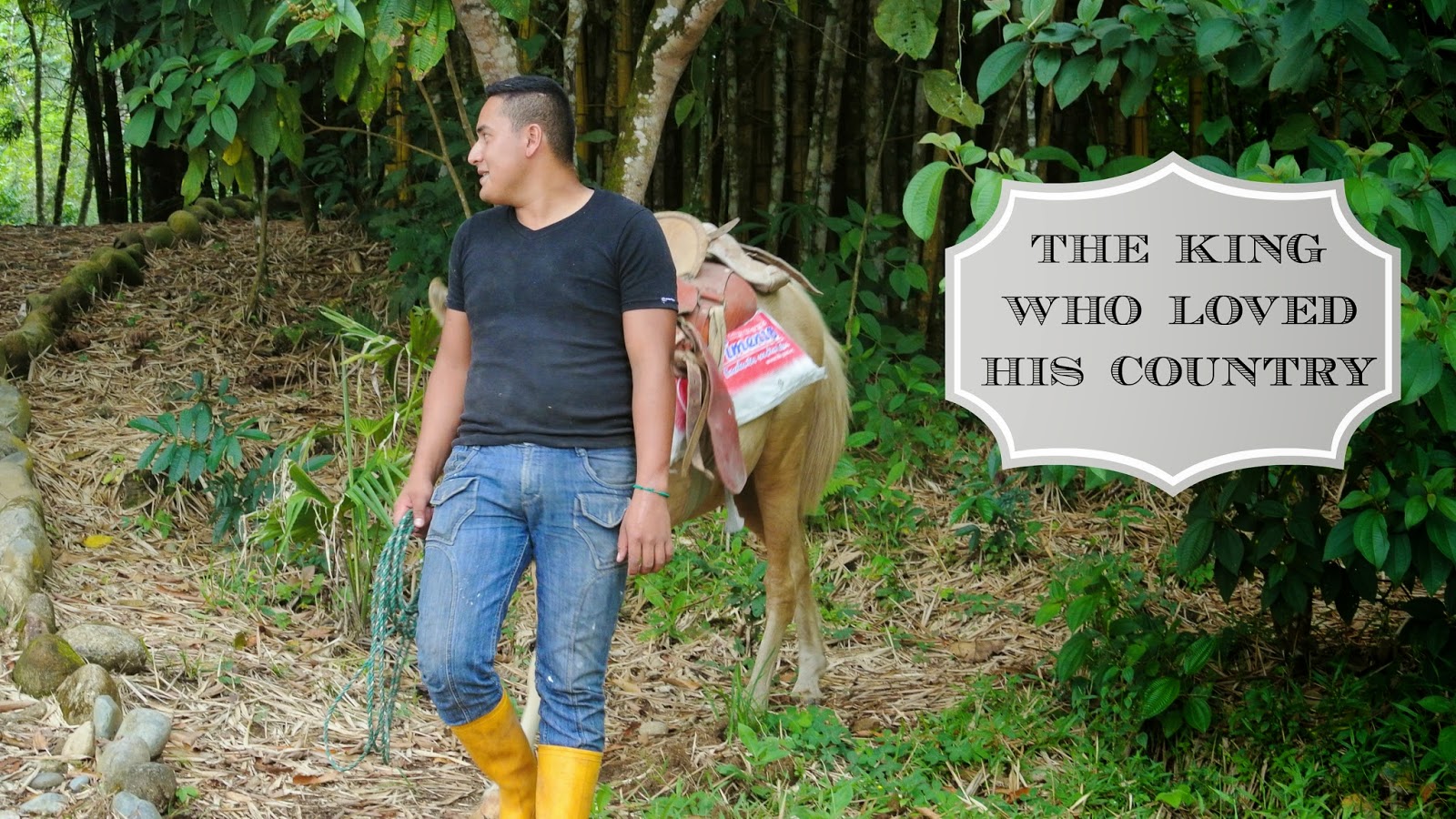
The king who loved his country

Once there was king who loved his country.

He gave his own bread to the starving and his gold to the poor.

He served his people and showed them his love through his deeds.

He judged them justly and did not take the bread away from the orphan, the widow or the foreigner.

He found a way for everyone to live together.

And the greatest deed for him was to wash the feet of his subjects.

The rich of the land were angered because the king wanted them to follow his example.

He told them to sell everything they had and give it to the poor.

I have worked hard for what I have, they clambered.

If my family would not have been wise and hidden the seed during the famine and let others to die,

I would not have anything, I'd be just like everyone else.

They mumbled.

You want us to be poor, just because everyone else is poor, they claimed.

Well, that won't happen because we have our pride.

We have the sacred right of the property.

And so they stormed the king's house, killed him and burned it to the ground.

Thursday, June 19, 2014

The Queen With The Frozen Heart 10


A group of men appeared under the canopy of the leaves at the limit of the fields with the jungle.

The men carried long chonta spears and blow pipes wit poisonous darts.

All of them had different animals in their chakras that they had hunted and two of the men carried a pekari, a jungle's wild boar, between them.

We have arrived, the first man called and the rest followed him in a row.

All of them were strong men, muscled and fearsome warriors of the forest.

The children run around them, and laughed in high voices, the women greeted them with joy.

The group laid their eyes on the prince and silence grew in the village.
 Who is he, asked a man with blue parrot feathers in his hair and a puma by his side, who is he and why is he in our village.

I have come well, answered the prince and bowed his head.

The women grew silent and returned to their fires, the children ran away.

Rumi stepped ahead, I welcomed him, he answered quietly, he has come well, and he has drinked our chicha.

The men looked at the stranger surprised, there was no way to throw him away tonight, he had been given chicha already, and with it their welcome and hospitality.

Well, we must show the stranger that we are hospitable people and we know how to treat the strangers, the man with the puma answered.
 I am not a stranger, prince answered, I am Amarun, your prince, and I have come to seek men to help me to free my father, the king, from the hands of the jaguar men and the vultures in the North.

Everyone fell quiet.

Let us talk; an old man very much alike Rumi answered finally, let us talk and drink ayawaska, so we can know what we should.

Yes kuraka, the other men nodded; that is the best thing we can do.

Let us talk and drink ayawaska, the sacred drink, the man with the puma nodded.

I am Ukuku, he said, like the ocelot.

A good name for a fierce warrior and sage hunter, the prince thought.

This is our kuraka, Ukuku nodded at the old man, our wise man, the one who talks with the nature and the spirits.
I am kuraka, the man nodded; my name is Urku, like the mountain. And I rise above the other men in my quest for the good of our people.

I am Amarun, the prince answered, like the noble boa, wise and ancient. And I have his magic, together with him I can talk with the earth, the water, the fire and the air.

That is good, the old man nodded, that is how it should be.

Women, Ukuki barked, get the pekari and get some food coming for us.

The women run to take the meat from the men and to start cooking.

Issa, bring us chicha, Ukuki called, we shall talk and kuraka needs to get ayawaska ready to be able to spirit travel.

Yes father, Sisa stared at her toes and ran to do as her father had ordered.

She is kacike's daughter, Amarun thought looking at her sinuous form, descendant of a chief, a woman worthy of a leader.


To be continued...

This is the tenth part of the story.


If you want to read the first part of the story go to The Queen With The Frozen Heart 1

To read the second part, go to The Queen With The Frozen Heart 2 

To read the third part, go to The Queen With The Frozen Heart 3

To read the fourth part, go to The Queen With The Frozen Heart 4

To read the fifth part, go to The Queen With The Frozen Heart 5


To read the sixth part, go to The Queen With The Frozen Heart 6


To read the seventh part, go to The Queen With The Frozen Heart 7


 To read the eight part, go to The Queen With The Frozen Heart 8

To read the ninth part, go to The Queen With The Frozen Heart 9

To read the eleventh part, go to The Queen With The Frozen Heart 11

To read the twelth part, go to The Queen With The Frozen Heart 12