Wednesday, November 19, 2014

Ñusta Waysa Ishpinku Warmi - The Kichwa Beauty Queen of Tena


"Saint John of Two Rivers Tena" is also known as the "capital of guayusa and cinnamon".

A dance performance in the beginning of the Ñusta Waysa Ishpinku Warmi beauty contest.

The city had its 454th birthday on November 15th this year.


Part of the annual festivities for Tena’s anniversary is a beauty contest for local indigenous nationality, Kichwas.


The winner of the contest has a historical title: Ñusta Waysa Ishpinku Warmi.


It can be translated as The Queen of Cinnamon and Guayusa.

Warriors danced while the candidates first came to the stage.

But usually the shorter version of, Cinnamon and Guayusa Woman or Waysa Ishpinku Warmi, is used.

Former Ñusta Waysa Ishpinku Warmi being interviewed by local TV station.

This year’s reigning queen, Mabbel Andy, comes from the Kichwa area of Pano.


She won the judges over with her fluent Kichwa and ancestral knowledge.

Kuraka purifies the girls and makes them safe from the attacks of sacha supay, forest's evil demons.

In this beauty queen contest the majority of points come, not from the way the contestants look, but from their knowledge of Kichwa culture, language and tradition.
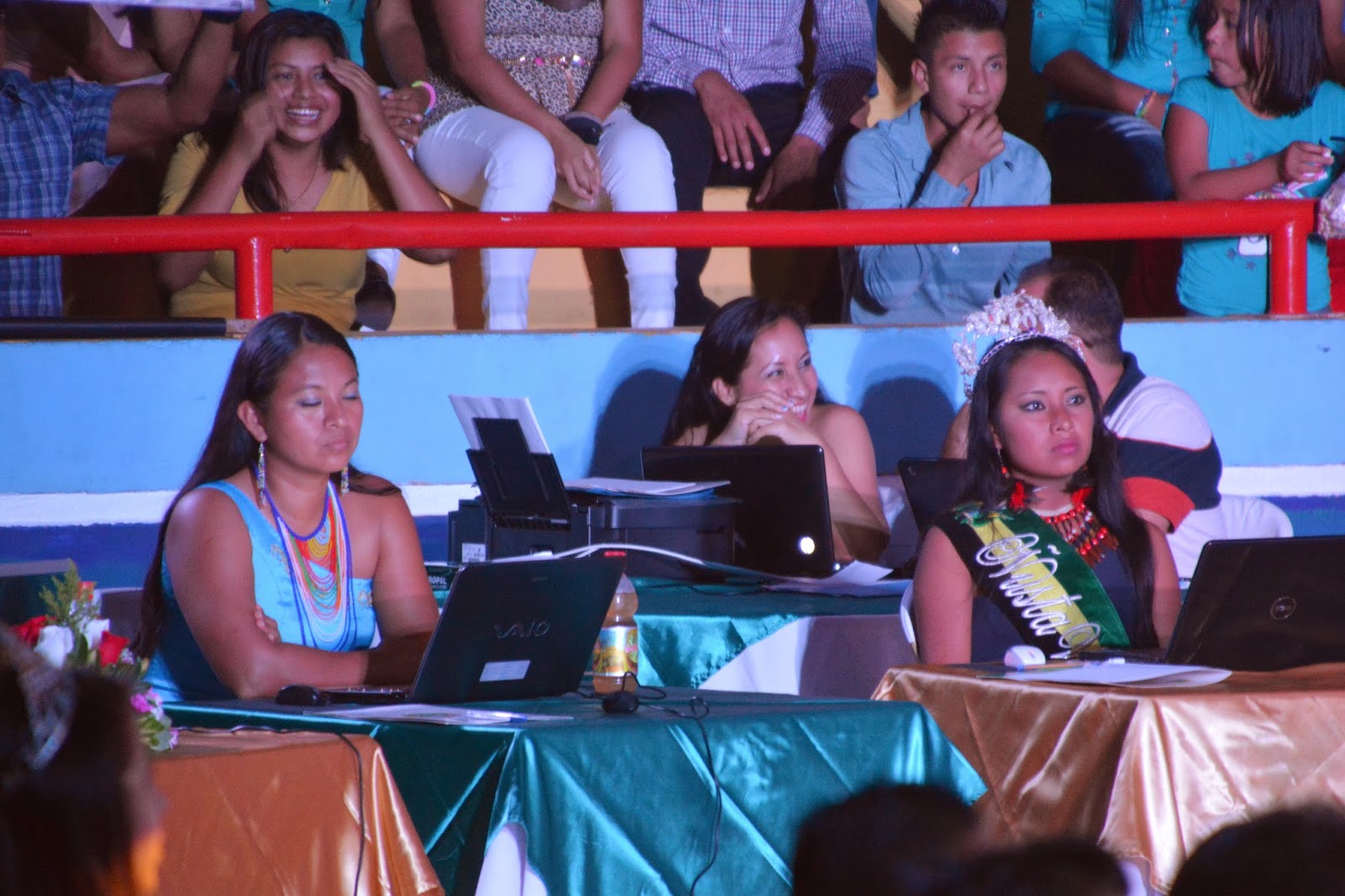
Two of the three judges, all of them women and either Kichwas themselves or fluent in Kichwa.

Another difference from the more familiar beauty pageants is the concept of the beauty in itself.

Tena's mayer (at the right) dancing with the Hispanic Beauty Queen, Reina de Tena, or Queen of Tena.

A beautiful Kichwa woman has a long straight hair that the contestant straightened even more with baby oil.

Contestants in their fantasy outfits.

A traditional beautiful Kichwa woman is also shy.

At the backstage during the contest.

She speaks in a quiet voice.

Depictions of traditional Kichwa way of life and dance performances.

She does not look people straight to the eye and the most important thing of all…

Ñusta Waysa Ishpinku Warmi 2014-2015 Mabbel Andy from Pano in her fantasy outfit.

A traditional Kichwa beauty is a bit round and has a feminine shape.


Monday, November 17, 2014

Salmon soup - Are you a traditionalist or do you enjoy experimenting?


Salmon soup is a perfect, simple, casual food for weeknight.

But it can also be considered to be a delicacy that you can offer to the guests.

The soup can be served as the first or the main course.

And you can spice it up with some cream or cream cheese into a wonderfully rich soup.

Serve it with a genuine rye bread.

And don’t forget the fresh dill.

It will give the soup its exquisite taste.

For me, growing up, salmon soup was one of the culinary highlights.

The creamy soup and rich taste of salmon, together with dill, were like heaven to me.

When I moved to Ecuador I didn’t want to lose this taste of home and childhood.

Sadly it is very hard, or even impossible, to find fresh dill here.

After some experimenting, I’ve learnt to enjoy the taste of rosemary in the soup.

It is not part of the original recipe, so if you want traditional Finnish salmon soup, you should use dill instead of rosemary.

Or maybe you should try both and decide for yourself which one you like the best.


Salmon soup

(For 2 people)

Ingredients

2 - 3. (250 g) in potatoes
1 medium onion
Butter
6 cups of water
4 whole allspices
500 g of salmon fillet
6 cups of water
2 to 3 dl cream
1/2 teaspoon salt
1 small branch of rosemary (or ½ cup of fresh dill)


1. Peel the potatoes and dice or block them. Peel and chop the onion.

2. Cook the salmon fillet in hot water until it’s done. Peel of the skin. Save the fish broth.

3. Put the potatoes and onion to the kettle. Sauté them in butter for a few minutes. Pour into a saucepan of hot fish broth with allspice and rosemary, and cook until the potatoes are almost cooked.

4. Add salmon in the soup broth. Add the cream and heat to a boil, but do not boil. Remove the pan from the heat.

5. Remove the rosemary branch or sprinkle the top of the soup plenty of chopped dill.

6. For the weeknight soup replace the cream with some milk.


ENJOY!

Friday, November 14, 2014

The Queen With The Frozen Heart - Down In The Dungeons


The delicious smell of cooking food wafted down the dungeon corridors.

The men around the king stirred in their cells, it was such a long time since they had eaten.

- I am old, he heard a muttering voice, hundreds of years old and nobody respects me. Who needs to carry food to the prisoners? Killa, of course. No, there's no one else around to do it. It has to be me. No respect for the age...


The aroma of the food grew stronger and the king could hear sounds of something being dragged on the cave floor.

- So which one of you is the supposed king, a grumpy voice asked from the darkness.

The men waited in silence, they had not given him up, even after all that had happens to them in the jaguar men's hands.


- For goodness sake, Killa swore, your son sent me, Amarun. I'm supposed to be here to save you.

King could see the old man dragging large bowl of food.

- My wife sent this to you, he explained, you'll need all your strength to escape.


- To escape, the king repented his bursts instantly.

- Yes, we are here to save you and get you back to your families, the old man sneered, I have bowls for you here somewhere. You need to eat fast so you'll ready when Iluku says it's time to leave. I'm Killa, by the way, nice to meet you and all that.

- Killa, one of the warriors shouted in surprise, the man from the moon?


- Yes, that's me, Killa preened, and who are you?

- I'm Rumi, the man stammered and blushed.

- And I am Umasiki, the king interrupted, what I would like to know is, why should we trust you?


The men in their cells took a step back and waited in silence.


- You don't need to trust me, Killa started serving the food, just eat and be ready. It won't be long anymore.

To be continued...


This is the twenty-seventh part of the story.

To read the first part of the story, go to The Queen With The Frozen Heart 1  

To read the second part, go to The Queen With The Frozen Heart 2 

To read the third part, go to The Queen With The Frozen Heart 3. 

To read the fourth part, go to The Queen With The Frozen Heart 4. 

To read the fifth part, go to The Queen With The Frozen Heart 5.

To read the fourteenth part, go to The Queen With The Frozen Heart 14

To read the sixth part, go to The Queen With The Frozen Heart 6

To read the seventh part, go to The Queen With The Frozen Heart 7

 To read the eight part, go to The Queen With The Frozen Heart 8

To read the ninth part, go to The Queen With The Frozen Heart 9

To read the tenth part, go to The Queen With The Frozen Heart 10

To read the eleventh part, go to The Queen With The Frozen Heart 11

To read the twelth part, go to The Queen With The Frozen Heart 12

To read the thirteenth part, go to The Queen With The Frozen Heart 13

To read the fifteenth part, go to The Queen With The Frozen Heart 15

To read the sixteenth part, go to The Queen With The Frozen Heart 16

To read the seventeenth part, go to the The Queen With The Frozen Heart 17

To read the eighteenth part, go to The Queen With The Frozen Heart 18

To read the nineteenth part, go to The Queen With The Frozen Heart 19

To read the twentieth part, go to The Queen With The Frozen Heart 20


To read the twenty third part, go to The Queen With The Frozen Heart - At The Mouth Of The Cave

To read the twenty fourth part, go to The Queen With The Frozen Heart - The Visiting Star

To read the twenty fifth part, go to The Queen With The Frozen Heart - Time To Leave The Home

To read the twenty-sixth part, go to The Queen With The Frozen Heart - A Suitable Wife

Wednesday, November 12, 2014

Fiestas de Tena - 454th Anniversary of the city of Tena


"Land of Cinnamon and Guayusa"


The city of Tena is called by many historians the City of St. John of Two Rivers Tena.


Tena is named after the two rivers, Tena and Pano, that cross the city.


In reality Tena is a small town, divided in two by the rivers.


The tranquility and friendliness of its people can be felt in its narrow streets.


By a Spanish ordinance the founding date of the city was set for November 15th on 1560.


Tena celebrates many important dates


The Tena Canton has a diversity of natural attractions and cultural events that are located in each of the parishes which have the same special features that allow visitors to learn about its history and traditions of the Kichwa and Huaorani ethnic groups.


The foundation date of Tena is on November 15th and this anniversary of the city is celebrated by its municipality and habitants with as much pomp and circumstance as possible.


The anniversary festivities last eleven days, starting at November 6th and continue until the 16th.


On the first day there is a civic parade but most of the people feel that the real festivities start when the carnival parade is held on the second day.


This is where the local barrios, organizations, companies, schools and everyone else has the chance to participate with their carnival float to honor Tena.


Tena's two beauty queens


This is also where the candidates for the Beauty Queen of Canton and Waysa Ishpinku Warmi, the Kichwa beauty queen of the canton, have their own floats and the chance to present their charms to the public.


Ishpinku is Kichwa for cinnamon and waysa (or guayusa) is a local plant that is used to make an energetic drink by indigenous people, warmi is the Kichwa word for woman, so the beauty queen is called Guayusa and Cinnamon Woman.


Tena is often called the land of cinnamon and guayusa because of they are both native to the area and traditionally very important to the people.


This year’s party


This year’s celebration has been full of color and culture.


The different organizations had done their best to top each other and every float from last year.


Besides the parades and elections of the two beauty queens there are different cultural and sport events, music, gastronomy and a fair lasting through the festivities with its own activities.

Monday, November 10, 2014

Ecuadorian Street Food - Five Tips for Eating the Unique and Delicious Dishes


Ecuadorian food is diverse, and underrated.

South American food has some similarities but Ecuador enjoys putting its own twist on South American favorites, as well as making some pretty unique dishes of its own.

Each of the country’s three geographic regions, the Amazon, the Sierra, and the Pacific Coast features its own array of local delicacies.


Ecuadorian Dishes on the coast normally contain seafood whereas up in the Andean region you will find more meat, rice and potatoes.

Soups seem to be popular everywhere.

Besides the typical delicacies Ecuador offers its own variety of street food.


If you are adventurous eater at heart, or even if you prefer more familiar options, you are sure to find something to enjoy.

Although street food suffers from bad reputations, Ecuador’s streets offer unique and delicious options.

And if you keep few tips in mind (and let your stomach get accustomed to the food gradually first) it is possible to eat, and enjoy, street food.


Leave your preconceived notions at the border, and make it a point to step outside your comfort zone while traveling through the country.

There are some Ecuadorian street foods that you will find in every region (Coast, Highlands, Amazon, and Galapagos Islands) of Ecuador and almost every city or small town.

There are also some street foods that are very regional and unique to specific cities.


One of the best places to find delicious street food is at ferias or local fairs and fiestas (local festivities).

Other popular places include markets, main plazas on weekends, beach towns, bus stops, and at the exits of local schools.

There are some traditional dishes that are popular at markets and people visit the markets specifically to be able to eat them.


Keep in mind that not all street food is cooked equal and if you are worried about the quality and your health when eating street food, then it’s best to get recommendations from locals.

I have gotten very sick from eating Ecuadorian street food.

But through the years I’ve learnt to recognize the stalls where you can eat safely and the ones where you cannot.


Always check how clean the place is and also the utensils, a good thing is to think about the smell also, does it smell delicious or like something has gone bad.

Many things can be seen just with the bare eye but an Ecuadorian trick is also to check how many people are eating in the place compared to the others next to it.

Usually the fullest, or the one with most buyers, is the best and safest.


Tips:


1. Make sure the place is clean looking and smelling, as the person selling and preparing the food.

2. Sanitize your hands before eating. Always carry a hand sanitizer with you.

3. Don’t eat mayonnaise, chili sauce, salads or fresh ingredients without cooking, or let them come into touch with your food. Sadly these are the ones with most parasites, and possible diseases.


4. Make sure the utensils are clean, and clean them with paper towel (and if necessary with bottled water) again.


5. Drink only bottled water. Make sure the juices and ice are done from bottled water.

Extra tip:
Look where the other's are eating. Usually the place that is full has good food, and it is good quality too. If in doubt ask from the hotel reception where to eat, taxi drivers also normally know good places that they can recommend.